What is Bilum?
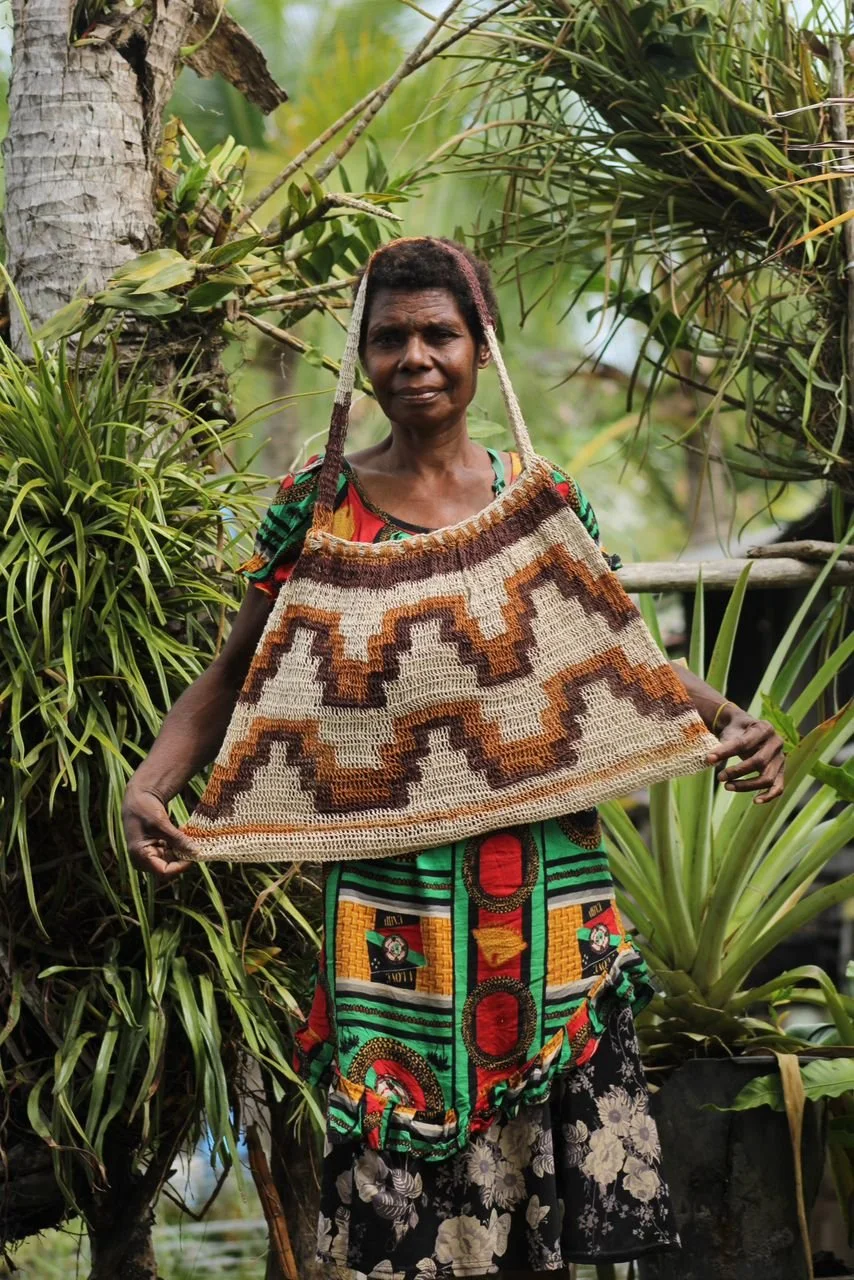
Bilums are not just bags — they are living expressions of culture, connection and resilience, handwoven by women from villages along the Sepik River in Papua New Guinea. Each one is born from an ancient weaving tradition passed down through generations, a tradition that holds identity, community and heritage at its heart.
In Tok Pisin, bilum can mean “womb” — reflecting the deep bond these pieces have with life, strength and nurture. Traditionally used for everything from carrying food and goods to cradling babies, bilums also appear in ceremonies and daily life across Papua New Guinea, following individuals through the rhythms of a lifetime.
Fibres
Each Bilum is entirely hand made from start to finish, with many taking up to eight weeks to complete. The fibres are gathered from local vegetation, including pandanus and tulip tree. Then carefully stripped, beaten and rolled against the knee before being twisted into fine, durable yarn.
The colours are then added using natural dyes derived from plants, ochre pigmentations and berries to bring depth and vibrancy to each design.
Every step reflects a considered, resourceful way of working — honouring traditional methods while embracing natural and recycled materials. It’s a testament to the extraordinary skill, patience and creativity of the women who carry this craft forward.
Weaving
Every Bilum is the reflection of generations of knowledge passed down from mother to daughter. The weaving begins with looping and twisting yarn by hand, row by row, gradually building the body of the bag. The shape grows naturally with the movements of the weaver’s hands, guided by intuition and experience.
Patterns and textures are created directly during the weaving, with each stitch carefully placed to form intricate designs. The process is slow and rhythmic, requiring focus and patience, and every movement contributes to a strong, flexible, and completely unique bag.